DIRECTOR: Steve McQueen
The newest film from acclaimed director Steve McQueen is based on a memoir by Solomon Northrup titled 12 Years a Slave. Northrup was a free black man living in New York who was kidnapped in 1841. He was sold into slavery in Louisiana and was finally rescued in 1853.
The movie is an absolute masterpiece. Everything about the film, from the cinematography, to the acting, to the writing is excellent. What possibly stands out the most is how the film is shot.
There are plenty of long takes which serve to really make the viewer experience the painful, sometimes graphic situations the film portrays. The horrors of slavery aren't sugarcoated here, but rather pushed to the forefront. I'm a huge fan of long takes and McQueen has clearly mastered them. Several of them feature some magnificent blocking and camera moves as well.
McQueen has already proven himself with his two previous films, Hunger and Shame, both of which got rave reviews. This is his third collaboration with cinematographer Sean Bobbitt, who also worked on The Place Beyond the Pines and the upcoming Oldboy remake directed by Spike Lee. 12 Years a Slave was shot on 35mm film in a 2.35:1 aspect ratio.
The amazing cast features quite a few accomplished actors. The main character, Northrup, was played by Chiwetel Ejiofor. He does a great job of portraying the terror of the situation while still maintaining a quiet dignity. Ejiofor has previously appeared in Salt, Children of Men, and Redbelt. There is a very good chance he could get an Oscar nomination for Best Actor. I can't think of anyone more deserving out the films released so far.
The supporting performances are all top-notch as well. Michael Fassbender is perhaps the best of them all in his haunting role as a sadistic slave owner. Fassbender starred in the two previous McQueen features; they clearly work well together. Benedict Cumberbatch is also outstanding, as is Paul Dano. Brad Pitt does fine in a role that amounts to little more than a cameo. The youngest Oscar-nominated actress ever, Quvenzhané Wallis, also appears.
12 Years a Slave is technically brilliant, but it's also a powerful film that packs an emotional wallop. In my opinion, it's the best movie of 2013 so far. I don't really see any of the upcoming 2013 films surpassing it. The only ones that could possibly compete would be the Coen Brothers' Inside Llewyn Davis and Martin Scorcese's The Wolf of Wall Street. However, I don't see either of those reaching the heights of this film. 12 Years a Slave will almost surely get a Academy Award nomination for Best Picture, along with several others.
The reception to this film has been almost unanimously positive. It has a score of 97 on Metacritic and the same on Rotten Tomatoes. It also has a 8.6 on IMDB.
RATING: 10/10
Follow me on Twitter at @KinoPravdaBlog or Facebook
Saturday, November 9, 2013


Friday, November 8, 2013
Thor: The Dark World is a satisfying sequel (8/10)
DIRECTOR: Alan Taylor
Thor: The Dark World is a satisfying sequel that perhaps surpasses the original. Alan Taylor, having directed several episodes of Game of Thrones, brings some of the vibe from that show to the world of Thor.
They delivered pretty much everything you could want from a Thor movie. There’s some striking visuals, lots of Loki, and a cool, albeit underdeveloped villain.
Said villain is Malekith, played by Christopher Eccleston, who is mostly known as the ninth incarnation of The Doctor on Doctor Who. Created by Walt Simonson, Malekith has been a Thor villain in the comics since 1984. Eccelston does a good job, but there isn’t much to his character besides being evil.
Most of the cast from the first film is back. Chris Hemsworth continues to do a solid job as the title character and Natalie Portman isn’t bad either as Jane Foster. Tom Hiddleston continues to be a standout as the devious Loki. Jaimie Alexander is back as Sif, who clearly has romantic feelings for Thor in this film and even gives Jane Foster a jealous look.
Idris Elba continues to be awesome as Heimdall, who is given more to do this time around. He even has his own epic heroic moment. Almost as cool is the newcomer bad guy Kurse, played by Adewale Akinnuoye-Agbaje, who played Mr. Eko on Lost.
The Dark World seems to be doing well with critics. As of 11/8 it has a 66% on Rotten Tomatoes, as well as a score of 7.7 on IMDB.
As is usual for Marvel Studios, there are two scenes after the credits. One of them features Benicio del Toro as The Collector, a role that will be fleshed out in the upcoming MCU flick Guardians of the Galaxy. That film will be released in August of 2014. Del Toro’s part seems pretty interesting and the scene definitely gets me hyped for Guardians.
Thor will appear next in The Avengers: Age of Ultron. It’s currently scheduled to come out on May 1, 2015. The next film in Marvel Cinematic Universe will be Captain America: The Winter Soldier, with a release date of April 4, 2014.
Hemsworth is contracted for a third Thor film, and that seems likely to happen. Many have speculated that the third installment with focus on Ragnarok, the apocalypse from Norse legends. A likely villain would be Surtur.
RATING: 8/10
Friday, October 25, 2013
The History of Comic Book Adaptations to Film: Part Thirteen (2009)
WATCHMEN

Watchmen is one of the most iconic and influential graphic novels ever made and often considered the best graphic novel of all time. It was originally published in 1986 and 1987 as a limited series. The artist was Dave Gibbons and the writer was the legendary Alan Moore. Gibbons served as a consultant on the film, but Alan Moore refused to have anything to do with it or even be credited.
The film had been in development for quite a long time, with Terry Gilliam, the director of Brazil and Fear and Loathing in Las Vegas, at one point attached, but he declared the work to be “unfilmable”. Then Darren Aronofsky was supposed to direct, but that fell through as well and eventually, the job went to Zack Snyder. He had previously directed the 2004 remake of Dawn of the Dead and the adaptation of Frank Miller’s graphic novel 300. However, his style over substance method of filmmaking was inappropriate for a work such as this.
The graphic novel is amazing, but the film fell far short of its potential. One major reason for this is that Watchmen is inextricably linked with its medium. This is illustrated by a quote from Moore where he states, “What I'd like to explore is the areas that comics succeed in where no other media is capable of operating.” Furthermore, Gibbons called it a “comic about comics.”
The adaptation got the visuals right but was misguided and perhaps too literal. There was also way too much in Watchmen to put into a single movie. Really, it needed to be a series of films or a miniseries.
Snyder was very faithful to the graphic novel, except for cutting out some subplots and the famously altered ending. The theatrical version also omitted the story-within-a-story that is "Tales of the Black Freighter", but it was included in an animated version for the DVD and Blu-Ray.
Some of the performances in Watchmen were great, and the best was given by Jackie Earle Haley as Rorschach. Jeffrey Dean Morgan was also excellent as the Comedian. However, some of the performances were subpar, especially Malin Akerman’s.
Also, while the comic had some violent moments, the movie was not subtle in its depictions of over-the-top violence and turned Watchmen into an action film. In Snyder's defense, I will say that using such a complex work as source material was a daunting task, and it easily could have turned out much worse.
Many people still consider it among the best comic book adaptations, and there are undoubtedly aspects of it that are very well-done. If you still haven't seen it, it's worth checking out and making up your own mind about it, especially if you're into comics.
Also, while the comic had some violent moments, the movie was not subtle in its depictions of over-the-top violence and turned Watchmen into an action film. In Snyder's defense, I will say that using such a complex work as source material was a daunting task, and it easily could have turned out much worse.
Many people still consider it among the best comic book adaptations, and there are undoubtedly aspects of it that are very well-done. If you still haven't seen it, it's worth checking out and making up your own mind about it, especially if you're into comics.
Watchmen premiered in more theaters than any other previous R-rated film. Unfortunately, it still didn’t do as well as expected. The budget was sizable at $130 million and the global box office was only $185 million. Reviews were mixed, giving it a 64% on Rotten Tomatoes.
X-MEN ORIGINS: WOLVERINE

Easily the worst film in the X-Men series so far was the clumsily titled 2009 film X-Men Origins: Wolverine. In fact, I’d rank it among the worst comic book films, period. The film was a prequel to the X-Men trilogy that solely focused on Wolverine. You know, just in case the previous three didn’t revolve around him enough.
This was Hugh Jackman’s fourth time playing Wolverine. This made him the first actor to play a superhero four times since Christopher Reeve. Counting his cameo in X-Men: First Class, he has now appeared as Wolverine 9 times, the most of any comic book character. However, Robert Downey Jr. has played Iron Man 8 times if you include his Incredible Hulk cameo and will tie Jackman in 2018 with Avengers: Infinity War.
The prequel was directed by Gavin Hood. At the time, he was mainly known for Tsotsi, but he was also the director for the adaptation of Ender’s Game, starring Harrison Ford and Ben Kingsley.
X-Men Origins featured the first cinematic appearances of a few notable X-Men. One of these was fan favorite Deadpool, who was created in 1991 by Rob Liefeld and Fabian Nicieza. Sadly, the film version of the character was quite different from the comics in both appearance and personality.

Many referred to the character, played by Ryan Reynolds, as “Deadpool in name only”. One of the main complaints was that they sewed up his mouth. Seeing as Deadpool is often referred to as the “Merc with a Mouth”, this was somewhat of an odd decision.
There was a hint that the character would come back in sequels, but the intensely negative reaction from fans meant that version of Deadpool would never be seen again.


Many referred to the character, played by Ryan Reynolds, as “Deadpool in name only”. One of the main complaints was that they sewed up his mouth. Seeing as Deadpool is often referred to as the “Merc with a Mouth”, this was somewhat of an odd decision.
There was a hint that the character would come back in sequels, but the intensely negative reaction from fans meant that version of Deadpool would never be seen again.

This film also was the first cinematic portrayal of Gambit, as he was intended to be in the original trilogy but kept getting cut out. He was played by Taylor Kitsch here and doesn't get much screentime.

The Blob appeared for the first time as well, played by Kevin Durand of Lost and Legion. Logan's brother Sabretooth is in this but is played by Liev Schreiber instead of original actor Tyler Mane and looks nothing the version seen in the first X-Men, which made no reference to them being related. There was even a small appearance by a digitally de-aged Professor X.

The Blob appeared for the first time as well, played by Kevin Durand of Lost and Legion. Logan's brother Sabretooth is in this but is played by Liev Schreiber instead of original actor Tyler Mane and looks nothing the version seen in the first X-Men, which made no reference to them being related. There was even a small appearance by a digitally de-aged Professor X.
Despite being a terrible movie and getting critically lambasted, X-Men Origins was a box office success. $373 million was the final tally, more than doubling the budget of $150 million. Its Tomatometer score is pretty low at 38%, but this is probably better than it actually deserves.
This film does have some entertainment value in a "so bad, it's good" kind of way and any fan of awful movies should give it a watch.
X-Men Origins was pretty much ignored by all future films and they didn't shy away from contradicting it like in First Class when they had a completely different version of Emma Frost. However, it was made fun of in the 2016 Deadpool solo film.
This film does have some entertainment value in a "so bad, it's good" kind of way and any fan of awful movies should give it a watch.
X-Men Origins was pretty much ignored by all future films and they didn't shy away from contradicting it like in First Class when they had a completely different version of Emma Frost. However, it was made fun of in the 2016 Deadpool solo film.
Tuesday, October 22, 2013
The History of Comic Book Adaptations to Film: Part Twelve (2008)
THE DARK KNIGHT
The Dark Knight is unquestionably one of the most influential comic book films ever made. It showed that superhero films could be serious, critically acclaimed films.


Before TDK, comic movies could get a good critical reception but were still generally seen as just entertaining popcorn films. Christopher Nolan changed that. His film got 8 Oscar nominations, the most ever for a comic book adaptation.
It won in two of those categories, one being Sound Editing. The other win was Heath Ledger for Best Supporting Actor, one of only two posthumous acting wins in Academy history. It was also the first time a comic book movie had won an acting Oscar or for that matter, any major Oscar at all. The other nominations were mainly in technical categories, but Wally Pfister did get one for the cinematography, just like for Batman Begins.
The Dark Knight did not get a nomination for Best Picture, however. This ended up being one of the most notable snubs in Oscar history and was considered emblematic of AMPAS being out of touch with the average filmgoer. Next year, the Academy switched to 10 nominees for the Best Picture category and many claimed that The Dark Knight was responsible.
TDK was equally successful commercially. It had a moderately sized budget at $185 million, but it made over a billion dollars. It was the fourth film to reach this mark. Right now, it’s the 28th highest grossing film ever. It solidified Christopher Nolan's reputation as one of the foremost filmmakers of our time.
This film was such a cultural phenomenon that other comic book films are often compared to it even to this day. When the first trailers for Iron Man 3 were released, many fans thought they were trying to put out a tone similar to The Dark Knight. Iron Man 3 ended up bearing little resemblance to Nolan's film.
Like the first film in the eventual trilogy, The Dark Knight was faithful to the source material in some ways, while differing in others. Two graphic novels that were cited as major influences were Alan Moore’s 1988 one-shot The Killing Joke (drawn by Brian Bolland) and The Long Halloween. The Long Halloween was published beginning in 1996, was written by Jeph Loeb, and illustrated by Tim Sale.
The Joker is vaguely similar to the source material, but some details have been changed. In the comics, he is permanently white due to falling in a chemical vat. This incident is never alluded to in the film, and there’s a scene showing the Joker without his white makeup.
The other villain in the film is Two-Face, played by Aaron Eckhart. Again, Nolan’s version is vaguely similar to the comic counterpart. However, Two-Face doesn’t really have a split personality in The Dark Knight, which is sort of the hallmark of the character. Originally, he was just going to be Harvey Dent in this film, only to be scarred in the third one. Instead, his storyline was condensed into one film.
The Scarecrow, another member of Batman’s rogues gallery, plays a minor role. This made Cillian Murphy the first actor to reprise a part as a Batman villain on film.
Another very influential film of 2008 was Marvel Studios' Iron Man. This was the first film from Marvel's in-house studio and the first installment of what would go on to become the Marvel Cinematic Universe. This was the first major example of an interconnected superhero universe on film.

The MCU would go on to include 7 films to date, with an 8th coming this fall. These include 3 Iron Man films, a Hulk movie, Captain America, and Thor. And last but not least, the massive hit that was The Avengers. Needless to say, a connected universe proved lucrative. But none of it may have occurred without the success of Iron Man.
A somewhat unlikely director was chosen in Jon Favreau. Originally an actor, Favreau wrote and directed his first feature film, Made in 2001. Made was a crime comedy starring Favreau and Vince Vaughn. His only other directorial effort before Iron Man was the 2003 Will Ferrell comedy Elf. This is not exactly the resume that would usually lead to getting a superhero blockbuster. Favreau went on to direct Iron Man 2 and Cowboys and Aliens.
Iron Man was a huge commercial success. It was moderately budgeted at 140 million dollars. The opening weekend of $100 million was almost enough to make that back. The final tally ended up being $585 million. The reviews were very good as well.
Undoubtedly, the main reason for the film's success was its star, Robert Downey, Jr. He perfectly portrays the wisecracking Tony Stark. The rest of the cast was solid as well. Downey has good chemistry with Gwyneth Paltrow as his love interest, Pepper Potts. Jeff Bridges is awesome as usual as Obadiah Stane, the villain and Terrence Howard is not bad as James Rhodes. However, in the sequel, he was replaced by Don Cheadle.
Iron Man also featured a cameo by Samuel L. Jackson in an after credit scene. He plays Nick Fury, the head of S.H.I.E.L.D. Fury was originally white in the comics, but in the "Ultimate" universe, he looks exactly like Jackson. The after credit scene set up the "Avengers Initiative", hinting at the future team-up. The scene was written by famed comic author Brian Michael Bendis.
Overall, the film was pretty faithful to the source material. One of the few major deviations was changing the location of Stark becoming Iron Man from Vietnam to Afghanistan. Also, Jarvis is a butler in the comics, but in the film, JARVIS is the name of Stark's talking AI system.
THE INCREDIBLE HULK
The second entry in the Marvel Cinematic Universe would end up being The Incredible Hulk. This version of the Hulk was unrelated to the 2003 Ang Lee movie Hulk. It's also not an origin story like so many other superhero films and relates the accident that made Bruce Banner the Hulk in the opening credits.

The movie was the fourth directed by Frenchman Louis Leterrier, having previously made Transporter, Transporter 2, and Unleashed. He would later direct Now You See Me and Clash of the Titans. The Incredible Hulk is Leterrier's best effort out of the ones I've seen.
Edward Norton was chosen to portray the title character, and the excellent Tim Roth is his nemesis, Emil Blonksy AKA The Abomination. In the film, he doesn't really go by this moniker but is simply referred to as an "abomination" at one point. Liv Tyler played the love interest Betty Ross and William Hurt filled the role of her father, Thunderbolt Ross.
The only connective tissue to Iron Man was a post credit scene involving Tony Stark talking to Thunderbolt Ross. After this, viewers would expect some sort of after credit scene in all the Marvel Studios films.
The character of the Hulk went on to appear in The Avengers. However, Edward Norton was replaced by Mark Ruffalo. This was unfortunate in terms of continuity but probably worked out for the best. Norton gave a rather serious performance as Banner and might not have fit in with the more lighthearted tone of The Avengers. It also might have been difficult balancing Norton's ego with the rest of the main cast.
The Incredible Hulk gave a decent showing at the box office but was still slightly disappointing. It failed to double its $150 million budget, making only $263 million worldwide.
THE SPIRIT
Next, we have The Spirit, based on the comic by legendary writer and artist Will Eisner. Eisner started writing in the 1930s and became well known for his work on The Spirit. In the 1970s he started working in longer forms, eventually leading to the conception of the term, "graphic novel". He continued to publish work up until his death in 2005.
In the 1970s, William Friedkin was considering making a film out of the character of The Spirit, but the film fell through.
The Spirit comics are awesome, but unfortunately, the film was atrocious. It was Frank Miller's first solo directorial effort after co-directing Sin City with Robert Rodriguez. Miller unwisely chose to apply the high contrast, green screen aesthetics of that film to Eisner's world.

The Spirit was a massive flop. It only grossed $39 million globally, far less than the budget of $60 million. The critics were equally harsh and it has an abysmal 14 percent on Rotten Tomatoes.
Perhaps Miller should have learned a lesson from the Sin City film and realized that it's better to stay true to the source material.
WANTED
Wanted was a comic limited series published in 2003 and 2004. It had art by J.G. Jones and was written by Mark Millar, who wrote the Marvel crossover Civil War and Kick-Ass, which was made into a movie itself in 2010. The filmed adaption of Wanted was released in 2008.
It was the first American film directed by Timur Bekmambetov. Previously he was known for the Russian language movies Night Watch and its sequel, Day Watch. He went on to direct Abraham Lincoln: Vampire Hunter and the 2016 version of Ben-Hur that failed with critics and audiences.
I haven't read the comic, but apparently, the film is not faithful to the source material, as the comic was more focused on supervillains.
Wanted was quite successful. It made over $340 million on a budget of about $75 million. It also received mostly positive reviews from critics. I found it to be pretty average and the whole idea of curving bullets is silly and ridiculous.
James McAvoy's career had just broken through in 2007 with his acclaimed performance in Atonement, and this was his first leading role in a big action movie. After this, he would, of course, be the younger version of Professor X in 3 X-Men films to date.
Among Wanted's supporting cast were Angelina Jolie, Morgan Freeman, rapper Common, and General Zod himself, Terence Stamp.
HELLBOY II: THE GOLDEN ARMY
Guillermo del Toro returned to the director's chair for this sequel. Most of the cast came back including Ron Perlman, Selma Blair, and Doug Jones. David Hyde Pierce, who did the voice for Abe Sapien in the first installment, was not in this. Instead, Doug Jones provided the voice in addition to the body for Abe. Seth MacFarlane of Family Guy fame also voiced a character.
Whether or not Hellboy II would even be made was in doubt. But del Toro had just come off the success of Spanish-language movie Pan's Labyrinth. This allowed him to go to work on the second Hellboy film.
It was mildly successful as it doubled its $80 million budget and got good reviews from critics. Hellboy II is very entertaining and easily the best of the smaller 2008 comic book movies.
PUNISHER: WAR ZONE
This film was considered a "soft reboot" of the first Punisher film. It didn't contradict anything that happened in it but didn't really have any strong connections either. The origin of The Punisher wasn't redone, but Thomas Jane was replaced by Ray Stevenson.
War Zone is much darker and more violent than the Thomas Jane version and was probably the most violent Marvel film at the time.
The director was German Lexi Alexander, who also made Green Street Hooligans and episodes of Arrow and Supergirl. She did a poor job here as the film ended up being pretty terrible. It made a measly $10 million worldwide, far below its modest budget of $35 million. The critics also blasted War Zone and it has a rating of only 27% on Rotten Tomatoes.
War Zone is a huge step down from the previous Punisher film and there hasn't been a theatrical version of the character since. He's only appeared in the Netflix series Daredevil.
SPEED RACER
You may not think of Speed Racer as being a comic book property, but the characters first appeared in manga form, so it qualifies. The manga was first published in 1958 and the U.S. TV show first aired in 1967. A live action version was in development since 1992.
The movie adaptation was directed by the Wachowski brothers. This was the first film they made after The Matrix trilogy and their first that wasn't rated R. The cast included Emile Hirsch, Christina Ricci, Susan Sarandon, John Goodman, and Matthew Fox.
The film flopped spectacularly. It made only $93 million globally, not enough even make back its budget of $120 million. Reviews were mostly negative leading to a 39 percent score on Rotten Tomatoes. While I understand why many don't like it and acknowledge its glaring flaws, I personally found Speed Racer to be entertaining and worth watching for its stunning visuals alone.

The MCU would go on to include 7 films to date, with an 8th coming this fall. These include 3 Iron Man films, a Hulk movie, Captain America, and Thor. And last but not least, the massive hit that was The Avengers. Needless to say, a connected universe proved lucrative. But none of it may have occurred without the success of Iron Man.
A somewhat unlikely director was chosen in Jon Favreau. Originally an actor, Favreau wrote and directed his first feature film, Made in 2001. Made was a crime comedy starring Favreau and Vince Vaughn. His only other directorial effort before Iron Man was the 2003 Will Ferrell comedy Elf. This is not exactly the resume that would usually lead to getting a superhero blockbuster. Favreau went on to direct Iron Man 2 and Cowboys and Aliens.
Iron Man was a huge commercial success. It was moderately budgeted at 140 million dollars. The opening weekend of $100 million was almost enough to make that back. The final tally ended up being $585 million. The reviews were very good as well.
Undoubtedly, the main reason for the film's success was its star, Robert Downey, Jr. He perfectly portrays the wisecracking Tony Stark. The rest of the cast was solid as well. Downey has good chemistry with Gwyneth Paltrow as his love interest, Pepper Potts. Jeff Bridges is awesome as usual as Obadiah Stane, the villain and Terrence Howard is not bad as James Rhodes. However, in the sequel, he was replaced by Don Cheadle.
Iron Man also featured a cameo by Samuel L. Jackson in an after credit scene. He plays Nick Fury, the head of S.H.I.E.L.D. Fury was originally white in the comics, but in the "Ultimate" universe, he looks exactly like Jackson. The after credit scene set up the "Avengers Initiative", hinting at the future team-up. The scene was written by famed comic author Brian Michael Bendis.
Overall, the film was pretty faithful to the source material. One of the few major deviations was changing the location of Stark becoming Iron Man from Vietnam to Afghanistan. Also, Jarvis is a butler in the comics, but in the film, JARVIS is the name of Stark's talking AI system.
THE INCREDIBLE HULK
The second entry in the Marvel Cinematic Universe would end up being The Incredible Hulk. This version of the Hulk was unrelated to the 2003 Ang Lee movie Hulk. It's also not an origin story like so many other superhero films and relates the accident that made Bruce Banner the Hulk in the opening credits.

The movie was the fourth directed by Frenchman Louis Leterrier, having previously made Transporter, Transporter 2, and Unleashed. He would later direct Now You See Me and Clash of the Titans. The Incredible Hulk is Leterrier's best effort out of the ones I've seen.
Edward Norton was chosen to portray the title character, and the excellent Tim Roth is his nemesis, Emil Blonksy AKA The Abomination. In the film, he doesn't really go by this moniker but is simply referred to as an "abomination" at one point. Liv Tyler played the love interest Betty Ross and William Hurt filled the role of her father, Thunderbolt Ross.
The only connective tissue to Iron Man was a post credit scene involving Tony Stark talking to Thunderbolt Ross. After this, viewers would expect some sort of after credit scene in all the Marvel Studios films.
The character of the Hulk went on to appear in The Avengers. However, Edward Norton was replaced by Mark Ruffalo. This was unfortunate in terms of continuity but probably worked out for the best. Norton gave a rather serious performance as Banner and might not have fit in with the more lighthearted tone of The Avengers. It also might have been difficult balancing Norton's ego with the rest of the main cast.
The Incredible Hulk gave a decent showing at the box office but was still slightly disappointing. It failed to double its $150 million budget, making only $263 million worldwide.
THE SPIRIT
Next, we have The Spirit, based on the comic by legendary writer and artist Will Eisner. Eisner started writing in the 1930s and became well known for his work on The Spirit. In the 1970s he started working in longer forms, eventually leading to the conception of the term, "graphic novel". He continued to publish work up until his death in 2005.
In the 1970s, William Friedkin was considering making a film out of the character of The Spirit, but the film fell through.
The Spirit comics are awesome, but unfortunately, the film was atrocious. It was Frank Miller's first solo directorial effort after co-directing Sin City with Robert Rodriguez. Miller unwisely chose to apply the high contrast, green screen aesthetics of that film to Eisner's world.

The Spirit was a massive flop. It only grossed $39 million globally, far less than the budget of $60 million. The critics were equally harsh and it has an abysmal 14 percent on Rotten Tomatoes.
Perhaps Miller should have learned a lesson from the Sin City film and realized that it's better to stay true to the source material.
WANTED
Wanted was a comic limited series published in 2003 and 2004. It had art by J.G. Jones and was written by Mark Millar, who wrote the Marvel crossover Civil War and Kick-Ass, which was made into a movie itself in 2010. The filmed adaption of Wanted was released in 2008.
It was the first American film directed by Timur Bekmambetov. Previously he was known for the Russian language movies Night Watch and its sequel, Day Watch. He went on to direct Abraham Lincoln: Vampire Hunter and the 2016 version of Ben-Hur that failed with critics and audiences.
I haven't read the comic, but apparently, the film is not faithful to the source material, as the comic was more focused on supervillains.
Wanted was quite successful. It made over $340 million on a budget of about $75 million. It also received mostly positive reviews from critics. I found it to be pretty average and the whole idea of curving bullets is silly and ridiculous.
James McAvoy's career had just broken through in 2007 with his acclaimed performance in Atonement, and this was his first leading role in a big action movie. After this, he would, of course, be the younger version of Professor X in 3 X-Men films to date.
Among Wanted's supporting cast were Angelina Jolie, Morgan Freeman, rapper Common, and General Zod himself, Terence Stamp.
HELLBOY II: THE GOLDEN ARMY
Guillermo del Toro returned to the director's chair for this sequel. Most of the cast came back including Ron Perlman, Selma Blair, and Doug Jones. David Hyde Pierce, who did the voice for Abe Sapien in the first installment, was not in this. Instead, Doug Jones provided the voice in addition to the body for Abe. Seth MacFarlane of Family Guy fame also voiced a character.
Whether or not Hellboy II would even be made was in doubt. But del Toro had just come off the success of Spanish-language movie Pan's Labyrinth. This allowed him to go to work on the second Hellboy film.
It was mildly successful as it doubled its $80 million budget and got good reviews from critics. Hellboy II is very entertaining and easily the best of the smaller 2008 comic book movies.
PUNISHER: WAR ZONE
This film was considered a "soft reboot" of the first Punisher film. It didn't contradict anything that happened in it but didn't really have any strong connections either. The origin of The Punisher wasn't redone, but Thomas Jane was replaced by Ray Stevenson.
War Zone is much darker and more violent than the Thomas Jane version and was probably the most violent Marvel film at the time.
The director was German Lexi Alexander, who also made Green Street Hooligans and episodes of Arrow and Supergirl. She did a poor job here as the film ended up being pretty terrible. It made a measly $10 million worldwide, far below its modest budget of $35 million. The critics also blasted War Zone and it has a rating of only 27% on Rotten Tomatoes.
War Zone is a huge step down from the previous Punisher film and there hasn't been a theatrical version of the character since. He's only appeared in the Netflix series Daredevil.
SPEED RACER
You may not think of Speed Racer as being a comic book property, but the characters first appeared in manga form, so it qualifies. The manga was first published in 1958 and the U.S. TV show first aired in 1967. A live action version was in development since 1992.
The movie adaptation was directed by the Wachowski brothers. This was the first film they made after The Matrix trilogy and their first that wasn't rated R. The cast included Emile Hirsch, Christina Ricci, Susan Sarandon, John Goodman, and Matthew Fox.
The film flopped spectacularly. It made only $93 million globally, not enough even make back its budget of $120 million. Reviews were mostly negative leading to a 39 percent score on Rotten Tomatoes. While I understand why many don't like it and acknowledge its glaring flaws, I personally found Speed Racer to be entertaining and worth watching for its stunning visuals alone.
Saturday, October 19, 2013
Machete Kills 6/10
MACHETE KILLS
DIRECTOR: ROBERT RODRIGUEZ
Machete Kills is somewhat disappointing. It's definitely a step down from the raucous fun of the first film, but still a mildly entertaining effort. Machete was more anarchic, whereas the sequel seems almost formulaic.
Robert Rodriguez returns to direct, but I think most of his fans were more eagerly anticipating his Sin City sequel. Danny Trejo comes back as the title character, as do supporting actors Jessica Alba, Michelle Rodriguez, and Tom Savini.
There were several newcomers to the cast. Perhaps the best was Demian Bichir who you might know as Esteban Reyes from the TV show Weeds. He's also appeared in films such as Heat, Savages, and Che. He gives an excellent performance here as a crazed revolutionary threatening to blow up Washington D.C.
The other standout is Mel Gibson as the film's true villain (his first role as a bad guy). He seems to be one of the few having fun here and his slightly over the top performance is spot on. Charlie Sheen also joins the franchise as the President of the United States. This seems to just be a bit of stunt casting, as he's largely on autopilot. Sheen was credited by his real name, Carlos Estevez, for the first time.
This is also the first film role for pop star Lady Gaga. She's decent, but her performance is nothing special.
Overall, the film just has a been there, done that kind of feel to it. There's not much here that wasn't done better in the first movie.
The critics haven't been good to Machete Kills. As of October 19th, it has a paltry 30 percent on Rotten Tomatoes and slightly better 41 on Metacritic. The IMDB rating is 6.3.
The box office performance hasn't been much better. It has only made a little over $5 million so far.
RATING: 6/10
DIRECTOR: ROBERT RODRIGUEZ
Machete Kills is somewhat disappointing. It's definitely a step down from the raucous fun of the first film, but still a mildly entertaining effort. Machete was more anarchic, whereas the sequel seems almost formulaic.
Robert Rodriguez returns to direct, but I think most of his fans were more eagerly anticipating his Sin City sequel. Danny Trejo comes back as the title character, as do supporting actors Jessica Alba, Michelle Rodriguez, and Tom Savini.
There were several newcomers to the cast. Perhaps the best was Demian Bichir who you might know as Esteban Reyes from the TV show Weeds. He's also appeared in films such as Heat, Savages, and Che. He gives an excellent performance here as a crazed revolutionary threatening to blow up Washington D.C.
The other standout is Mel Gibson as the film's true villain (his first role as a bad guy). He seems to be one of the few having fun here and his slightly over the top performance is spot on. Charlie Sheen also joins the franchise as the President of the United States. This seems to just be a bit of stunt casting, as he's largely on autopilot. Sheen was credited by his real name, Carlos Estevez, for the first time.
This is also the first film role for pop star Lady Gaga. She's decent, but her performance is nothing special.
Overall, the film just has a been there, done that kind of feel to it. There's not much here that wasn't done better in the first movie.
The critics haven't been good to Machete Kills. As of October 19th, it has a paltry 30 percent on Rotten Tomatoes and slightly better 41 on Metacritic. The IMDB rating is 6.3.
The box office performance hasn't been much better. It has only made a little over $5 million so far.
RATING: 6/10
Tuesday, September 24, 2013
The History of Comic Book Adaptations to Film: Part Eleven (2007)
2007
SPIDER-MAN 3

The biggest comic book movie of 2007 was easily Spider-Man 3. It was a monster at the box office, making a whopping $890 million on a $258 million budget. Spider-Man 3 made the most money out of any of the films in the trilogy and was the third highest grossing film of 2007.
The main cast and director Sam Raimi all came back for the third installment. James Franco returned to continue his transformation into the villainous New Goblin. The Vulture was also supposed to be a bad guy; Ben Kingsley was in talks to play him. However, they decided to go with other villains. One of the antagonists was Sandman, played by Thomas Haden Church.
The producers also insisted that the character of Venom be included. Raimi did not want to put him in the film, and expressed distaste for the character. However, Avi Arad demanded that he appear. In the final film, he is played Topher Grace of That 70s Show fame.
Another character forced in by the producers was Gwen Stacy. In the comics, she is Peter Parker’s first girlfriend, who ends up tragically dying. She was played by Bryce Dallas Howard.
Spider-Man 3 made a boatload of money but it didn’t match that success with critics and fans. The reviews were much more mixed than the previous two, leading to a 63% on Rotten Tomatoes.
Many comic book and Spider-Man fans were unhappy with film. It’s usually considered the worst of the Raimi trilogy. One of the major perceived faults was the filmmakers trying to cram too much into one movie.
There were three major villains: Sandman, Venom, and Harry Osborn. Gwen Stacy was also included with no clear significance to the plot or reason for being there. Fans were also upset that Uncle Ben’s death was retconned to have been committed by the Sandman. Roger Ebert summed it up by stating, “Spider-Man 3 is, in short, a mess. Too many villains, too many pale plot strands, too many romantic misunderstandings, too many conversations…”
At the time, a fourth film with the same cast and crew was planned. In 2009 rumors surfaced that John Malkovich would play the Vulture and Anne Hathaway would portray Felicia Hardy AKA the Black Cat. Raimi also reportedly considered utilizing the villain The Lizard, who ended up being the antagonist in the 2012 reboot.
In 2010, it was announced that Spider-Man 4 was cancelled due to Sam Raimi leaving. 2012 would see the release of the reboot, The Amazing Spider-Man, starring Andrew Garfield as the title character.
FANTASTIC FOUR: RISE OF THE SILVER SURFER

The second most successful Marvel film of 2007 was Fantastic Four: Rise of the Silver Surfer. While nowhere near Spider-Man 3’s status, it did make a respectable $289 million worldwide. This was more than double the $130 million budget. The main cast all returned as did director Tim Story.
The big news this time around was the addition of Marvel heavyweights the Silver Surfer and Galactus. Galactus and the Silver Surfer first appeared in The Fantastic Four #48 in 1966.
The Silver Surfer saved his homeworld (called Zenn-La) from being destroyed by Galactus, the devourer of planets, by agreeing to be his herald. Both of them have been crucial parts of the Marvel Universe.
For this film, the filmmakers were originally unsure if the Silver Surfer would speak. When it was decided that he would, the voice was done by Laurence Fishburne. The motion capture was performed by Doug Jones.
The Silver Surfer is very similar to his appearance in the comics, but the same can’t be said for poor Galactus. Galactus is always portrayed as an enormous man in a crazy looking purple outfit. However, in this film he’s just a huge cloud. As you can imagine, this upset a lot of comic fans.
Their basic story is the same, Galactus devours worlds and the Silver Surfer is his herald and used to be named Norrin Radd. I can understand why they didn't want to do a comic perfect translation of Galactus' iconic and distinctive design as that could be difficult to pull off, but they didn't even try to come close.
Instead, they went with an extremely generic looking dark cloud. And of course in the comics Galactus can speak and have conversations as opposed to the silent film version. The Silver Surfer looks kind of cool, but the effects aren't very convincing. One major deviation from the comics is that he gets his power from the board.
Their basic story is the same, Galactus devours worlds and the Silver Surfer is his herald and used to be named Norrin Radd. I can understand why they didn't want to do a comic perfect translation of Galactus' iconic and distinctive design as that could be difficult to pull off, but they didn't even try to come close.
Instead, they went with an extremely generic looking dark cloud. And of course in the comics Galactus can speak and have conversations as opposed to the silent film version. The Silver Surfer looks kind of cool, but the effects aren't very convincing. One major deviation from the comics is that he gets his power from the board.
As with many comic book films, the reviews were negative. Rise of the Silver Surfer has a poor rating of 37% on Rotten Tomatoes.
Right off the bat, the film lets you know how terrible it's going to be with an incredibly cringey scene of Reed Richards dancing in a club using his stretch powers. The plot is formulaic and leads to an unexciting conclusion.
Despite being awful, this version is much more entertaining and enjoyable than the dreary, miserable 2015 reboot.
Right off the bat, the film lets you know how terrible it's going to be with an incredibly cringey scene of Reed Richards dancing in a club using his stretch powers. The plot is formulaic and leads to an unexciting conclusion.
Despite being awful, this version is much more entertaining and enjoyable than the dreary, miserable 2015 reboot.
GHOST RIDER

We come to yet another Marvel character being adapted for cinemas; this time it’s Ghost Rider, created in 1972. The film languished in development hell beginning in 2000, when Johnny Depp was attached to star. Stephen Norrington, director of Blade, was at one point supposed to direct. The job eventually went to Mark Steven Johnson, who made another Marvel film, Daredevil.
The star was Nicolas Cage as the titular Ghost Rider. The supporting cast included Eva Mendes, Sam Elliott, Wes Bentley as Blackheart, and Peter Fonda as Mephistopheles.
While the character of Ghost Rider is pretty cool, sadly the film is quite horrible. It’s very cheesy and has dreadful performances, and Nicolas Cage is over the top as usual. Critics weren’t kind to it and it has a pathetic 26% on Rotten Tomatoes.
On the other hand, the film was a financial success, making slightly more than double its budget.
300
Perhaps spurred on by the success of Sin City, another Frank Miller work was chosen to be adapted into a film.
300 is a 1998 graphic novel inspired by the events of the Battle of Thermopylae. The historic battle took place during the second Persian invasion of Greece in 480 B.C. The comic, like its filmed version, took some liberties with history.
The graphic novel did have some pretty amazing art, and the film wisely sticks close to the visual style Miller laid out. Overall, the film is quite faithful to the comic. Miller served as an executive producer and consultant for the movie. The film succeeds as much as it does mostly because of how true it stays to the source material.
The director was Zack Snyder, whose only previous film was the 2004 remake Dawn of the Dead. He went on to direct more comic films, including the Alan Moore adaptation Watchmen and the Superman reboot Man of Steel. He’s also scheduled to direct the upcoming Batman/Superman crossover.
300 starred Gerard Butler as King Leonidas in his breakout role. Lena Headey appeared as Queen Gorgo, his wife. She went on to play Cersei Lannister in HBO’s Game of Thrones.
This was also the first film for Michael Fassbender, who was later the younger version of Magneto.
300 was the subject of a bit of controversy. Part of this stemmed from its historical inaccuracy. However, the movie is presented as a story being told by one of the characters. There are also several outlandish moments that show that historical accuracy wasn’t the filmmakers’ main concern.
Furthermore, many criticized the political and social viewpoints there were apparently promoted by the film, some even going as far as to label it “fascist”. There were also some who took issue with the portrayal of Persians, viewing it as racist. Many Iranians were particularly upset and the Iranian government even made official statements denouncing it.
Despite the controversy, 300 was a success. It had a budget of $65 million, making a huge profit with its $456 million worldwide gross. It even got decent reviews, earning a 60% on Rotten Tomatoes.
There was a sequel released in 2014, titled 300: Rise of an Empire. Snyder did not direct but stayed on as a producer and writer. In my opinion, 300 is Zack Snyder's best film and it's leagues ahead of his later efforts like Man of Steel and Batman v. Superman. This is also the best comic book adaptation of the year.
TMNT
TMNT is the fourth film based on the Ninja Turtles comic series, but the first to be done in animation. It was originally announced in 2000 with John Woo as the director, but he went on to other things.
The job ended up going to Kevin Munroe, who also wrote the script. This was Munroe’s first feature, and he would go on to make Dylan Dog: Dead of Night and Ratchet and Clank.
There were many well-known names in the voice cast. Sarah Michelle Gellar was the voice of April O’Neill and Chris Evans portrayed Casey Jones. Laurence Fishburne provided the narration, while Zhang Ziyi and Patrick Stewart also had supporting roles.
The voices for the Turtles themselves did not belong to celebrities. Leonardo was portrayed by James Arnold Taylor who played Obi-Wan in the Clone Wars miniseries as well as The Clone Wars, the 3-D series.
TMNT cost $34 million to make. It opened number one and eventually raked in $95 million globally. The reviews were mainly negative and it only has a 34% on Rotten Tomatoes.
This film is a bit underwhelming, but it's significantly less embarrassing than the Michael Bay produced abominations to follow.
This film is a bit underwhelming, but it's significantly less embarrassing than the Michael Bay produced abominations to follow.
30 DAYS OF NIGHT
30 Days of Night was based on a horror comic written by Steve Niles and illustrated by Ben Templesmith. The series actually began as a film pitch. When this wasn’t successful, it was turned into a comic book.
The adaptation was directed by David Slade. Slade has an interesting resume. His first feature was the disturbing indie film Hard Candy.
He also directed the music video for “Donkey Rhubarb” by IDM artist Aphex Twin. His third flick was The Twilight Saga: Eclipse, released in 2010. Since then, he has mainly worked in TV, directing episodes of Breaking Bad and Hannibal.
The cast for this film included Josh Hartnett, Melissa George, Ben Foster, and Danny Huston. It was, for the most part, a mediocre, forgettable effort.
30 Days of Night still made a decent showing at the box office. It only cost $30 million to make and made $75 million worldwide. Critics gave it middling reviews, earning the film a score of 53 on Metacritic and 51% on Rotten Tomatoes.
In 2010, a straight to video sequel was released, titled 30 Days of Night: Dark Days.
ALIEN VS. PREDATOR: REQUIEM
Requiem was a sequel to the earlier Alien vs. Predator film. Unfortunately, it wasn’t much better than the first. The directors this go-around were The Brothers Strause, who went on to make the equally lackluster Skyline.
Many fans complained that the first motion picture was rated PG-13. The Alien and Predator films in their respective franchises had always been rated R. This one corrected that perceived mistake, but it didn’t really help.
The movie wasn’t screened for critics in advance. Once they got a chance to view it however, the reviews were mainly negative, as it has a paltry 12% on Rotten Tomatoes. Nigel Floyd of Time Out called the dialogue “unspeakable” and Ty Burr of the Boston Globe said the acting “stinks.”
Another major flaw that many critics and fans pointed out is the awful lighting. Mark Olsen of the Los Angeles Times noted, “The action is rendered with such disconcertingly low light levels… that it can be a strain to simply see what is occurring on-screen.”
I can't help but agree with the critics; there's not much to like about this film.
I can't help but agree with the critics; there's not much to like about this film.
Alien vs. Predator: Requiem was financially successful, however. It was decently low budget at only $40 million and made over three times that amount at the worldwide box office at $128 million.
There has not been another film in the Alien vs. Predator franchise to date.
Monday, September 16, 2013
The History of Comic Book Adaptations to Film: Part Ten (2006)
2006
SUPERMAN RETURNS

After the Superman film franchise reached its nadir in the late 1980s, several attempts were made to get Clark Kent back on the big screen. None of them reached fruition until 2006 with Superman Returns.
To direct, Warner Brothers went with Bryan Singer. Singer had directed the first two films in the X-Men series, and was supposed to direct the third. He chose to work on this film instead.
Singer wanted an unknown to play Superman, so he went with Brandon Routh. Kevin Spacey was picked for the villainous Lex Luthor and Kate Bosworth portrayed Lois Lane. Spacey had worked with Singer previously on The Usual Suspects, a role which won Spacey the Oscar for Best Supporting Actor. Singer also reused another actor he had worked with, James Marsden. Marsden portrayed Cyclops in all three X-Men films, and in Superman Returns, he plays Lois Lane’s husband.
This film is an interesting example of continuity. It was the fifth film in the series, but it only took into consideration the events of the first two movies, while ignoring the last two. This is probably due to the poor quality of the third and fourth installments in the Superman franchise.
However, this led to some timeline issues. The first two films were set in the late 1970s/early 1980s. This film is supposed to take place only a few years after Superman II, and yet it clearly takes place in the 2000s.
Another odd thing about this film is the use of stock footage. Singer used previously filmed footage of the deceased Marlon Brando so that he could once again portray Jor-El, Superman’s real father.
Superman Returns was somewhat of a disappointment. It failed to reach $400 million worldwide on a budget of about $200 million.
This was a decent outing, but not the massive hit WB was hoping for. However, it does have a respectable score of 75% on Rotten Tomatoes.
Part of the problem is this film spent too much time looking back to the previous Superman films. It was meant mainly as an homage, but it doesn’t work on its own.
It rehashed too many elements of what came before. For example, we once again see Lex Luthor attempt a land scheme.
A lack of action was also a perceived problem with the film. Many fans claimed that Superman never punches anyone. This issue was fixed, perhaps to the point of overcompensation, in the 2013 reboot Man of Steel.
Fans also complained about aspects of the story that didn’t jive with their perception of Superman. For example, Superman leaves Earth for five years, even though he has a son.
Many said that Clark Kent shouldn’t be a “deadbeat dad”, although to be fair, he wasn’t aware that he had a child until he came back. Superman also tries to hit on Lois while she is married, and uses his X-ray vision to spy on her.
The film was misguided from the beginning. The original Superman series was successful in a vastly different era. Modern audiences flock to superhero films starring the snarky Spiderman or the gritty X-Men, not a boy scout like Superman is often portrayed.
The successful comic films also usually have a charismatic lead like Hugh Jackman. In comparison, Brandon Routh has little screen presence.
Despite the lukewarm reception to Superman Returns, a sequel was at one point planned. It was supposed to come out in the summer of 2009. However, these plans were scrapped and WB went with a reboot instead.
X-MEN: THE LAST STAND

Singer leaving the X-Men franchise left FOX frantically searching for a replacement director for X-Men: The Last Stand. They chose Brett Ratner, best known for making Rush Hour, Rush Hour 2, and Red Dragon. This was a poor choice.
Joss Whedon, who has written X-Men comics, was given the chance to direct. However, he turned it down because he was working on a Wonder Woman film that never materialized. A Joss Whedon X-Men film really could have been something special.
Matthew Vaughn was also extended the offer, but he declined as well. He would eventually direct X-Men: First Class in 2011.
Singer’s script had a few major differences from the final version. One is that Emma Frost was going to be included as a villain. She isn’t in the final film, but ended up in X-Men: First Class. Gambit, a very popular X-Man, was also going to appear. He was finally shown on screen in X-Men Origins: Wolverine.
Financially speaking, the third X-Men was a success. In fact, it was the highest grossing in the series (and still is to this day). Globally, it made $459 million, while costing $210 million to make.
` However, the film didn’t do as well with critics and X-Men fans. The Metacritic score is 58 and the RT rating is a similar 57%.
Many comic book fans were not happy with the film for various reasons. Cyclops, who had been shoved to the side throughout the first two movies, was unceremoniously killed off after about 5 minutes of screen time. They also killed off another crucial character, Professor X.
The Last Stand just tried to do too much. There were too many plot lines and characters jammed in. The Phoenix saga and the cure storyline could have both carried a movie on their own. Angel is a cool character, but he really didn’t have much relevance to the overall plot. The same goes for Juggernaut.
ART SCHOOL CONFIDENTIAL
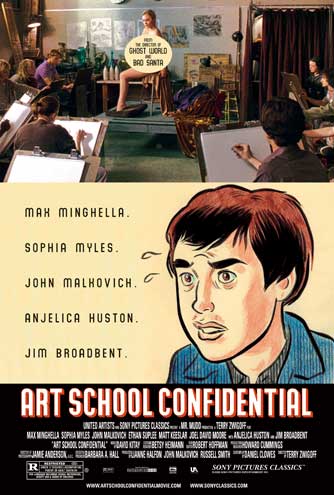
Art School Confidential was the second film based on the work of Daniel Clowes, following the underrated Ghost World. Terry Zwigoff was the director of both films. This one starred Max Minghella, John Malkovich, Anjelica Houston, and Jim Broadbent.
The movie wasn’t much of a success. It only made $3.3 million at the box office, less than its $5 million budget. The reviews weren’t good either. It has a 36% on Rotten Tomatoes and 54 out of 100 on Metacritic.
Subscribe to:
Posts (Atom)