Ads

Wednesday, December 23, 2015

The History of Video Game Movies (Part 2: 2000-2004)

You can watch a video version of this article here.

The 1990s saw the beginning of video game adaptation to film and had a couple big hits such as Street Fighter and Mortal Kombat. However, in the next decade video game movies saw an increased mainstream acceptance with huge hits from equally big gaming franchises like Resident Evil and Tomb Raider. The early half of the 2000s doesn't feature the glut of game adaptations that we saw in later years, but it definitely set the course for what was to come.

The first one of the decade was in 2000, with Pokemon: The Movie 2000, an animated version of the incredibly popular RPG series published by Nintendo and developed by Game Freak. It was the second animated film based on Pokemon. In Japan, the film was released in 1999, but it came out in American theaters on July 21, 2000. Kunihiko Yuyama was the director and he was mainly known for his work in the Pokemon franchise.


The first live-action video game adaptation came in 2001, Lara Croft: Tomb Raider starring Angelina Jolie in the title role. Tomb Raider also featured her father, Jon Voight, and Iain Glen, who later played Jorah Mormont on Game of Thrones. Daniel Craig also appeared in one of his earlier roles.


At the time, Tomb Raider was the highest grossing action film with a female lead, unless you count Terminator 2: Judgement Day. The movie made $274 million worldwide on a budget of $115 million, easily making it a success.

Despite the film's financial success, the critical reception was much worse. On Rotten Tomatoes, its score is currently at a rather low 19 percent, and it was even nominated for a Razzie award for Worst Actress.

As far as video game adaptations go, it was one of the better ones. It was decently entertaining as a summer popcorn flick and that's all it ever intended to be.


Wednesday, November 18, 2015

The History of Star Fox (Part 2: 2003-2016)

Part 1 in this series covered the classic era of Star Fox (1993-2002) and can be read here. I also uploaded a video version of it.

Additionally, you can watch a Youtube version of the following article.


Many fans consider the classic era to be Star Fox's peak, but the years since then have been more of a mixed bag.

After Star Fox Adventures, Star Fox: Assault (the fourth game in the franchise), brought the series back to its space combat roots. It was released for the Nintendo Gamecube in 2005 (February of that year in North America and Japan).


The working title was "Star Fox Armada", but the subtitle was eventually changed to Assault. The game was developed by Nintendo and Namco, famed developers of Pac-Man, Tekken, Galaxian, and Ace Combat. Many of the same Namco developers who worked on Ace Combat 04: Shattered Skies helped make this game.

The directors for Assault were Toshiyuki Nakanishi, Hideki Okazaki, and Yutaka Yoshida. As far as producers go, they were Tsuyoshi Kobayashi, Shigeru Miyamoto, and Takaya Imamura, who was a graphic designer on Star Fox and the art director on Star Fox 64.

While the game was being developed a Star Fox arcade game was rumored, but nothing ever materialized from this.

After Adventure's shift in gameplay, Assault brought Star Fox back to being a space shooter. However, there were still on foot missions in addition to using the Arwing and Landmaster tank.


Assault was linear in terms of mission choices; the branching paths of earlier games such as Star Fox for the SNES and Star Fox 64 were gone.

Concerning the levels themselves, some were on rails and some allowed full freedom of movement. Furthermore, the player could even hop in and out of the Arwing at certain points.

Sunday, October 25, 2015

The History of Star Fox (Part 1: 1993-2002)

You can also watch a video version of this article here.

While never as massive as Mario, Zelda, or Pokemon, Star Fox has been one of Nintendo's flagship series for over two decades. It all started in 1993 with a revolutionary game that brought 3D gaming to the masses.


The first game in the Star Fox series actually had its roots in a prototype called NESGlider, that was being developed for Nintendo's first home console, the Nintendo Entertainment System. The prototype was inspired by a game named Starglider, released in 1986 for the Atari ST, Commodore Amiga, MS-DOS, and Apple II, among other platforms. Starglider was developed by a British company named Argonaut Software. Argonaut was formed in 1982 and eventually worked on Star Fox with Nintendo EAD.


The prototype was then ported to Nintendo's next console, the SNES. However, the developers weren't satisfied with the 3D abilities of the Super Nintendo, so they decided to make special hardware in order to increase the SNES's 3D capabilities. This led to the creation of the very influential Super FX chip.

The Super FX was a coprocessor that allowed the SNES to render 3D polygons. The chip was included in the cartridge itself, which made games with the chip more expensive than other Super Nintendo games. Partly because of this fact, only a few games were made with the chip, including Dirt RacerDirt Track FX, and Vortex.


Star Fox was designed by Shigeru Miyamoto and Katsuya Eguchi. Miyamoto is one of the biggest names in gaming and had a hand in creating iconic Nintendo franchises such as Mario, The Legend of Zelda, F-Zero, and Pikmin. He created puppet characters for Star Fox that were eventually photographed for the cover.


Eguchi had previously worked as a designer on Super Mario Bros. 3 on the NES/Famicom, but this was the first title he directed. He would go on to direct Animal Crossing, Wave Race 64, and serve as a producer on Wii SportsNintendo Land, and Animal Crossing: New Leaf.


The characters were designed by Takaya Imamura, who would later be a producer on Star Fox Command for the Nintendo DS. Hajime Hirasawa composed the music.

Thursday, October 8, 2015

A Guide to the Earliest Animated Films (1900-1915)


The field of animation has been one of the most interesting and creative forms of film and its history goes almost all the way back to the beginning of movies.

The first example is a short two-minute film called The Enchanted Drawing from the year 1900. It was not entirely animated as it included live action footage, but it was the first movie with animated sequences as far as I am aware.


It consists of a man (in live-action) drawing a picture of a male face on an easel, as well as other objects such as a cigar and a glass of wine. He takes the drawings off the paper and they turn into real items. Also, the man in the drawing magically changes his facial expressions and this is where the stop-action animation part comes in. So it really isn't an animated film in the traditional sense, but it qualifies enough to be included here.


The Enchanted Drawing is a cute, gimmicky film that's definitely worth checking out to see the roots of animation.


The short was directed by a man named J. Stuart Blackton (he also starred in the film) who was born in the UK but came to the US at age 10. He is often referred to as the father of American animation.


Friday, September 4, 2015

A (Somewhat Personal) History of VHS

THE HISTORY OF VHS


The VHS format is now obsolete two times over, but its influence on the entertainment industry is undeniable. It brought home video into the mainstream for the first time and changed the way we think about viewing movies more than any other home video format.

VHS stands for Video Home System and was the consumer standard for video cassette tapes for decades.


For a bit of context, magnetic tape video recording was used in the television industry beginning in the 1950s, but it wouldn't be mainstream for home use until the 1970s.

The first commercially successful Video Tape Recorder was released in 1956 by the AMPEX corporation and it was called the AMPEX VRX-1000.


Eight years later in 1964, a Japanese company called JVC (Victor Company of Japan) entered the fray with their own videotape recorder. It was dubbed the DV220 and was their standard until the 1970s.


Then in 1969 JVC began a collaboration with two other Japanese electronics giants, Sony and Matsushita Electric, who later became Panasonic. The goal was to create a video recording standard for all of Japan. The result was a format called U-matic that released in 1971. Unlike the more common reel-to-reel systems of the time, it contained the tape in a cassette. It wasn't that successful, partly because the machine cost $1400 and blank tapes were thirty bucks. There were no prerecorded movies sold for the format, it was strictly for recording television.


After this, Sony and Matsushita decided to work on their own formats. The latter started work on the short-lived VX format, but Sony began to work on Betamax, the main competitor to VHS.


Tuesday, September 1, 2015

A Guide to Early Science Fiction Films (1920-1929)

The following essay serves as part 3 of my series on the history of science fiction films. Please take a moment to check out part 1 and part 2 if you haven't done so already.

I've also made a video version of those articles, which you can watch here and here.


In the 1920s, science fiction movies began to be a bit more common. In 1920, there were two.

One was a German film titled Algol: Tragedy of Power. It was directed by Hans Werckmeister and starred Emil Jannings, who later became to the first person to receive an Academy Award.


The plot centers around an alien that gives a coal miner a machine that could allow him to rule the world. Algol features sets by Walter Reimann, who was a designer on the famous German horror film The Cabinet of Dr. Caligari.


Algol was thought to be lost for many years until it was recently rediscovered.


Also in 1920, there was a 15-episode serial released called The Invisible Ray (dir: Harry A. Pollard). It's about scientists discovering a ray with special powers and using it for a criminal scheme. Ruth Clifford and Jack Sherrill were the stars.

Unfortunately, it is currently considered lost and not much information is readily available online about it.


In 1921, a sci-fi flick called L'uomo meccanico, or The Mechanical Man was released, directed by Andre Reed. It's delightful cheesiness makes it one of my favorites from the era. This is mostly due to the awesome, goofy design of the titular robot.


It was originally around 80 minutes, but only 26 minutes survive. A scientist creates a robot that can be controlled remotely and has super-human strength. However, a group of criminals kills the scientists and use the robot to commit crimes.


Friday, August 7, 2015

The History of Video Game Movies (Part 1: The 1990s)

The History of Video Game Movies (Part 1: The 1990s)


Video games have been made into movies for almost three decades now. In this article, I’m going to talk about the very earliest examples.

Before getting into the first live action video games movies of the early 1990s, I’d like to mention what is apparently the first adaptation of a video game into film.

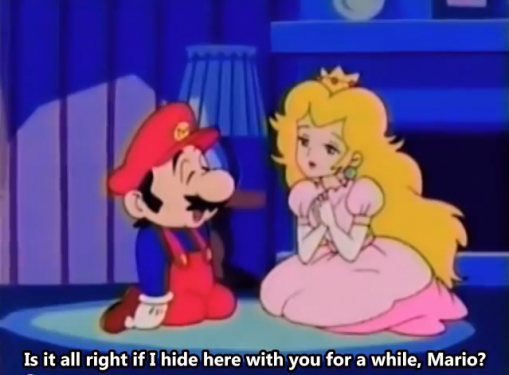
I’m referring to a somewhat obscure animated version of Super Mario Bros. released in 1986 (one year after the original NES game). It was called Super Mario Bros.: Peach-Hime Kyushutsu Dai Sakusen! and directed by Masami Hata.


They never released it outside of Japan or dubbed it into any other language. The English translation of the title is “The Great Mission to Rescue Princess Peach.” This would be the first of many anime versions of video games.

The anime is kind of “meta” in a way as the plot involves Mario and Luigi getting stuck in a Famicom game.


The first live action adaptation of a video game was also based on Super Mario Bros. The film of the same name came out in 1993 and is one of the most infamous movies of all-time. It was a huge disaster both commercially and with critics and is often mentioned as one of the worst movies ever. Super Mario Bros. only made $21 million back out of its $48 million budget.


It was so bad that it seems to have scared Nintendo off making any movies based on their properties. There has not been a live action TV or film version of a Nintendo series since.

The film was directed by husband and wife team Annabel Jenkel and Rocky Morton, who were known for creating the Max Headroom TV show, but not much else.

Bob Hoskins starred as Mario and John Leguizamo played Luigi. They were referred to in the movie as “Mario Mario” and “Luigi Mario” due to them being known as the “Mario Bros.” This is somewhat logical, but I believe this has never been the case in any of the games.


Dennis Hopper played a version of Mario’s arch-nemesis Bowser, but he was called King Koopa as he was in some of the cartoons. The role was also offered to Arnold Schwarzenegger and Michael Keaton.


Bowser looks totally different from the games, as he is basically a reptilian-looking human instead of a creature that is clearly of a different species. Yoshi is also much more realistic and looks nothing like the original character.