Ads

Friday, August 7, 2015

The History of Video Game Movies (Part 1: The 1990s)

The History of Video Game Movies (Part 1: The 1990s)


Video games have been made into movies for almost three decades now. In this article, I’m going to talk about the very earliest examples.

Before getting into the first live action video games movies of the early 1990s, I’d like to mention what is apparently the first adaptation of a video game into film.

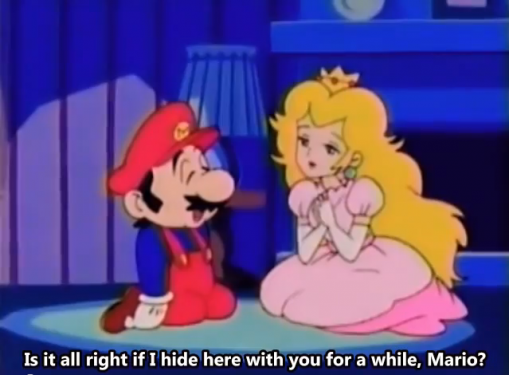
I’m referring to a somewhat obscure animated version of Super Mario Bros. released in 1986 (one year after the original NES game). It was called Super Mario Bros.: Peach-Hime Kyushutsu Dai Sakusen! and directed by Masami Hata.


They never released it outside of Japan or dubbed it into any other language. The English translation of the title is “The Great Mission to Rescue Princess Peach.” This would be the first of many anime versions of video games.

The anime is kind of “meta” in a way as the plot involves Mario and Luigi getting stuck in a Famicom game.


The first live action adaptation of a video game was also based on Super Mario Bros. The film of the same name came out in 1993 and is one of the most infamous movies of all-time. It was a huge disaster both commercially and with critics and is often mentioned as one of the worst movies ever. Super Mario Bros. only made $21 million back out of its $48 million budget.


It was so bad that it seems to have scared Nintendo off making any movies based on their properties. There has not been a live action TV or film version of a Nintendo series since.

The film was directed by husband and wife team Annabel Jenkel and Rocky Morton, who were known for creating the Max Headroom TV show, but not much else.

Bob Hoskins starred as Mario and John Leguizamo played Luigi. They were referred to in the movie as “Mario Mario” and “Luigi Mario” due to them being known as the “Mario Bros.” This is somewhat logical, but I believe this has never been the case in any of the games.


Dennis Hopper played a version of Mario’s arch-nemesis Bowser, but he was called King Koopa as he was in some of the cartoons. The role was also offered to Arnold Schwarzenegger and Michael Keaton.


Bowser looks totally different from the games, as he is basically a reptilian-looking human instead of a creature that is clearly of a different species. Yoshi is also much more realistic and looks nothing like the original character.


Thursday, May 14, 2015

The Newest Additions to my Youtube Channel (music videos, live shows, film history, gaming)

I've recently added a few things to my Youtube Channel, which I'd like to link to here.


The first I'll mention is a video version of an article I recently wrote on the earliest science fiction films from 1895-1909.


I also uploaded a couple recordings of live music. One was shot by a friend of mine, Melissa Tarantola, at a Radiohead concert in 2012. The video is of the world premiere of their track "Full Stop".


The second was shot by me at a Clark concert this April in St. Louis, MO. Clark is a British electronic artist signed by Warp Records.


My channel featured an electronic track called "Oxycan" produced by a friend of mine from Columbia, MO who goes by the name of Beat Monk. 


I also made a video compilation showing the evolution of the Star Fox video game franchise.


Finally, I uploaded my unofficial music video for a track by VHS Head.


Please subscribe to my channel if you are so inclined.


Wednesday, May 13, 2015

A Guide to Early Science Fiction Films (1910-1919)

This article is a sequel to a previous post of mine, The Earliest Science Fiction Films (1895-1909). The sci-fi movies of the 1910s will be covered this time.

I've also made a video version of this essay which can be seen here.


Our first notable science fiction flick of the decade comes in 1910, with an approximately 15 minute long adaptation of Mary Shelley's Frankenstein. This was actually the first of many movie versions of the famed novel.


It was made by Thomas Edison's studio and directed by J. Searle Dawley. Dawley directed dozens of films from 1907 to 1926.

Frankenstein took awhile to shoot compared to most films of the day, due to the heavy special effects work. Various sources state filming took place from either three days or up to almost a week.


Apparently, the film diverged a lot from the source material. According to Wikipedia, "The production was deliberately designed to de-emphasize the horrific aspects of the story and focus '...upon the mystic and psychological problems that are to be found in this weird tale.'"

Furthermore, Filmbuffonline.com states, "One of those changes made to the narrative concerns the creation of Frankenstein’s monster. While Shelly’s novel did not go into specifics about the monster’s creation, the creation scene in the film certainly owes more to alchemy than science."


That same site also claims that Frankenstein was not well-received by audiences, saying that people didn't know what to make of the "weird story" because it was one of the earliest horror films. Apparently, some also objected to the "blasphemous" content.


The film was considered lost for decades, starting pretty much immediately after its release. It was rediscovered in the 1970s and publicly screened for the first time since its original release in 1993.


Saturday, May 9, 2015

The Earliest Science Fiction Films (1895-1909)

Science fiction films have been around almost as long as the medium itself.

The earliest film that could really be considered sci-fi in any way (to the best of my knowledge) is a 50 second short from 1895. It's called the Mechanical Butcher, with the original French title being La Charcuterie mécanique.

The simple premise is that a butcher has a fantastical machine that can convert a pig into sausages. However, upon viewing the film, it seems the butcher is simply a charlatan. So this film's status as science fiction is dubious. According to Wikipedia, it has been cited as the first sci-fi film at least once, by Phil Hardy in The Overlook Film Encyclopedia.

It was made by the highly influential French directors, the Lumière Brothers.


The next contender for the title of first SF film is Gugusse and the Automaton, from 1897. Like the previous short, it was a French work made by a famous director. This time it was Georges Méliès, who was a cinematic pioneer in many ways, including his groundbreaking work with special effects.

 Gugusse is about a robot, and is supposedly the first film to feature one. A book titled  Things to Come: An Illustrated History of the Science Fiction Film said that this "may be the first true SF film."

Sadly, the film is assumed to be lost as of now, as is the case many of that era.


Méliès also directed the next film I'll discuss, which is undoubtedly science fiction and is the one most often described as the first SF movie. I'm talking of course about A Trip to the Moon, or La Voyage dans la Lune in the original French.

As you may imagine it's about astronauts taking a trip to the earth's moon. They encounter fantastical aliens there, and the film is the source of the famous image of the moon with a face getting hit by a spaceship. The plot has been cited as being influenced by the work of Jules Verne.


This is definitely the most well-known film from Méliès (who also starred in the film), as well as one of the most famous silent films in general. At 13 minutes, it was his longest film yet, and probably his most complex, taking three months to film.

A Trip to the Moon is over the top, but intentionally so, and this is a big part of what makes it so entertaining. Everything is very stylized and theatrical (Méliès began his career in the theater). Fitting the theatrical style, each scene is played out in a wide shot with a stationary camera. There are no close ups and no continuity editing.


Méliès wanted to release the film in America, but Thomas Edison's company secretly made pirated copies of it. When it was shown in the United States, all the money went to Edison instead of Méliès. It was a huge hit so it would have probably helped Méliès stave off his eventual bankruptcy.

Despite its popularity, A Trip to the Moon was actually considered lost for awhile. Méliès was somewhat forgotten until a resurgence of interest in his work in the late 1920s. By 1930, there were two extant copies of the film, but they were both incomplete. It was actually not until 1997 that it was completely reconstructed. There was even a hand-colored print found in 2002.

As a film about space travel, it is the first film featuring classic science fiction themes. I would consider it to be the first true sci-fi movie.


Wednesday, April 29, 2015

A Brief History of Aspect Ratio in Film and Television

This essay will focus on a part of filmmaking you may not have given much thought to, aspect ratio. Aspect ratio is simply the ratio of the width of the image to the height. It is written with the width first, like 4:3 or 16:9.

Sounds simple, right? Well, it has actually been somewhat of a complicated issue over the years.


The aspect ratio most commonly used in the early years of cinema was 1.33:1, which is also written as 4:3. This is a much more square shape than most movies of today.


Thomas Edison was one of the first film pioneers. His company needed to come up with a standard for their 35mm silent films. His assistant and noted filmmaker William K. Dickson decided on an image that was 4 perforations (holes in the filmstrip going up the side, commonly called perfs) high.


This standard became a bit more official in 1909. The Motion Picture Patents Company had just formed the previous December; they were a trust of all the big movie companies, the biggest distributor, and Eastman Kodak, the main supplier of film.

They aimed to standardize all aspects of film production and exhibition. They decided on using 35mm gauges with an aspect ratio of 1.33:1 and an image that is 4 Edison perfs high.

The Edison standard was solidified in 1917 when the Society of Motion Picture Engineers adopted 1.33:1 as their engineering standard. A similar ratio would be used in most films for the next few decades.


In the 1920s, there was some usage of widescreen in shorts and newsreels but it was still uncommon. In 1927, french director Abel Gance released the classic silent film Napoleon, which had an experimental sequence that used three screens side-by-side. This basically resulted in an extreme widescreen aspect ratio of 4:1.


Monday, April 27, 2015

Music Videos for Jeff Mills and Oneohtrix Point Never

I'm back again with two more of my unofficial music videos set to electronic music. This time one of them is for one of the most influential techno artists Jeff Mills, and his seminal track "The Bells." The videos I used were from various silent science fiction films, such as Metropolis, The Mechanical Man, and A Voyage to the Moon.


Next we have a unique track from Oneohtrix Point Never called "Problem Areas". I edited from various surrealist films from the 1920s and 1930s from artists like Man Ray and Marcel Duchamp. Thanks for watching.


Thursday, April 16, 2015

My reaction to the second trailer for The Force Awakens


Lucasfilm just released the highly anticipated second trailer for the new Star Wars film, The Force Awakens. I'm a huge Star Wars fan, so I'll go ahead and break down the trailer shot for shot.

The first shot is of a desert planet that is reminiscent of Tatooine, but is apparently actually a planet called Jakku that has not been featured in any Star Wars media previously. This might be a sign that Tatooine is not in the movie at all. I'm okay with this as shoehorning the planet into every episode isn't a good idea. Adding new planets is always good as well, I wouldn't want to just be returning to previously seen planets.


It pans to the left and we see a crashed X-Wing, and then a massive Star Destroyer that has crashed as well. This is a really cool shot and feels like classic Star Wars. Clearly the effects of the war between the Empire and Rebellion are still being felt.


Then we hear the voice of Luke, who was absent from the first trailer. The dialogue is taken from Return of the Jedi, and he says 'The force is strong in my family."

We then cut to a shot of Darth Vader's helmet which has been badly burnt. This makes sense as his suit was burnt by Luke in Episode 6. However, it does seem a bit odd that someone fished his helmet out of the funeral pyre, but perhaps it makes sense in context. Regardless, it makes for a cool visual and is yet another clear sign of the connection to previous films in the saga. Over the shot, there is Luke continuing, "My father has it... I have it."


At this point, we are graced with our first shot of R2-D2. Next to the droid is a figure clad in a black robe with a white sleeve underneath. This person also has a visibly mechanical hand. Presumably this is Luke. If so, I think his outfit is fitting.


Luke goes on, "My sister has it," and there's a shot of a lightsaber being passed from one hand to another. We can assume one of the pairs of hands belongs to Leia. Hopefully, this is indication that she is a Jedi in this trilogy as was implied by Return of the Jedi.

Then he says, "You have that power, too." The clear implication is that he is speaking to someone related to him who is strong in the force. Whether this is his child or Leia and Han's is unclear. I really hope that Luke has offspring, whether it be male or female.


Then we get some X-Wings flying over water in what is probably from the same sequence shown in the first trailer. Oscar Isaac is shown in the cockpit as his character Poe Dameron. It's great seeing the X-Wings back in action again.


Next, there's a very quick, but visually impressive shot of villain Kylo Ren swinging his interestingly designed red lightsaber, followed by another short clip of Daisy Ridley and John Boyega running from an explosion in the desert as Rey and Finn.

After that, they chose a close up of Kylo Ren's mask with him in the classic "using the force" posture. His character is design is really cool and he is one of the most intriguing parts of the trailer.

There's a shot of some updated Stormtroopers, TIE Fighters blowing up, and Finn taking off his helmet as a Stormtrooper.

We also get a quick peek at the "Chrome Trooper" design. The character is rumored to be portrayed by Gwendoline Christie of Game of Thrones. I'm not too sure how I feel about the shiny armor, but I will wait to see how it looks in the final film.

Following that is an adorable shot of the robot BB-8 poking his head around the corner.


One of the coolest parts is easily seeing the Millenium Falcon in action again being chased by some TIE Fighters. Some may say it's just fanservice, but isn't that what this movie is all about?


At then, the climactic shot of the trailer. At first, we just hear Harrison Ford say, "Chewie." Then we see none other than Han Solo and Chewbacca in the interior of the Falcon. This is the first clear shot we get of any of the main characters from the original trilogy, and it is plain awesome.

The only weird thing about the shot is that Chewbacca seems to be kind of awkwardly holding up his crossbow. This doesn't seem to match Han's demeanor as he doesn't seem to be in any sort of danger. However, again like many other comments I made, this may make more sense in the final film.


Overall, I am very pleased with the trailer. It really seems like they are getting the tone of Star Wars right. I kind of wish they had shown a bit more, but they are obviously trying to keep thing under wraps. Neither of the trailers has really given any indication as to what the plot will be.